
Introduction
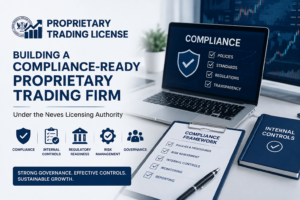
The proprietary trading industry has experienced significant growth as firms leverage technology, sophisticated trading strategies, and skilled professionals to participate in global financial markets. While profitability remains a key objective, long-term success depends on much more than trading performance. A Proprietary Trading Firm must establish strong governance, effective Compliance practices, robust Internal Controls, and a culture of accountability to maintain operational integrity.
The Neves Licensing Authority provides a structured framework that encourages responsible business operations, transparency, and sound governance. Organizations operating within this framework are expected to build systems that promote Regulatory Readiness, strengthen risk management, and support sustainable business growth.
This article explains how proprietary trading firms can build a compliance-ready organization under the Neves Licensing Authority framework and why compliance should be viewed as a strategic advantage rather than simply a regulatory obligation.
What Does Compliance Mean for a Proprietary Trading Firm?
Compliance is the process of ensuring that a firm’s operations, governance, and internal procedures align with applicable regulatory standards and organizational policies. For a Proprietary Trading Firm, compliance extends beyond following rules—it involves creating an operational environment built on transparency, accountability, and ethical decision-making.
Within the Neves Licensing Authority framework, compliance supports:
- Responsible trading practices
- Strong corporate governance
- Operational transparency
- Effective risk management
- Business continuity
- Sustainable organizational growth
A well-structured compliance program strengthens the firm’s reputation while helping management identify and address operational risks before they become significant issues.
Establishing Strong Internal Controls
One of the most important aspects of building a compliance-ready organization is implementing effective Internal Controls.
Internal controls are policies, procedures, and monitoring mechanisms that help ensure business operations remain secure, efficient, and properly governed.
Examples of strong internal controls include:
- Clearly documented operating procedures
- Segregation of duties
- Approval and authorization processes
- Trade monitoring systems
- Financial reporting controls
- Record management procedures
The Neves Licensing Authority encourages firms to establish governance structures that reduce operational risks while supporting consistent decision-making across all business functions.
Developing a Comprehensive Compliance Framework
Every Proprietary Trading Firm should develop a structured compliance framework that clearly defines responsibilities throughout the organization.
A comprehensive framework generally includes:
- Compliance policies
- Governance procedures
- Employee responsibilities
- Risk assessment processes
- Incident reporting procedures
- Documentation standards
- Ongoing compliance monitoring
Rather than treating compliance as a separate department, firms should integrate it into daily business operations to ensure consistency across all activities.
This approach helps improve operational efficiency while strengthening Regulatory Readiness.
Risk Management as a Core Compliance Function
Effective compliance cannot exist without sound risk management.
Trading firms operate in dynamic financial markets where operational, technological, financial, and strategic risks must be continuously assessed and managed.
The Neves Licensing Authority promotes a risk-based approach that encourages firms to:
- Identify operational risks
- Evaluate trading exposures
- Monitor business processes
- Review governance effectiveness
- Update internal policies regularly
- Respond proactively to emerging risks
By embedding risk management into daily operations, firms improve resilience while maintaining a stable and controlled business environment.
Creating a Culture of Compliance
Compliance begins with leadership.
Senior management plays a vital role in promoting ethical behavior and ensuring that compliance responsibilities are understood throughout the organization.
A strong compliance culture encourages employees to:
- Follow documented procedures
- Report operational concerns
- Maintain accurate records
- Act with integrity
- Support transparent decision-making
- Understand governance responsibilities
Organizations operating under the Neves Licensing Authority framework benefit from fostering a workplace where compliance is considered everyone’s responsibility rather than solely the responsibility of compliance personnel.
Documentation and Record-Keeping
Accurate documentation forms the foundation of effective compliance.
Every Proprietary Trading Firm should maintain organized records that demonstrate adherence to internal policies and governance procedures.
Important documentation may include:
- Corporate policies
- Governance manuals
- Risk assessments
- Internal audit reports
- Operational procedures
- Employee training records
- Compliance reviews
Well-maintained records improve transparency while supporting ongoing operational oversight and future business growth.
Employee Training and Awareness
Policies are only effective when employees understand them.
Regular compliance training helps staff stay informed about governance expectations, operational procedures, ethical standards, and internal controls.
Training programs should cover topics such as:
- Corporate governance
- Internal reporting procedures
- Risk awareness
- Documentation standards
- Operational controls
- Compliance responsibilities
Continuous education strengthens organizational consistency while reducing operational errors and improving overall performance.
Maintaining Regulatory Readiness
Regulatory Readiness is an ongoing process rather than a one-time achievement.
As business operations evolve, firms should regularly review their governance structures and compliance programs to ensure they remain effective and aligned with changing operational needs.
Best practices include:
- Periodic internal reviews
- Policy updates
- Governance assessments
- Risk evaluations
- Internal control testing
- Continuous operational improvement
The Neves Licensing Authority encourages organizations to maintain proactive governance systems that support long-term stability and responsible business operations.
Technology and Compliance
Technology has become an essential tool for modern proprietary trading firms.
Digital solutions can enhance compliance by improving:
- Operational monitoring
- Risk reporting
- Document management
- Workflow automation
- Audit trails
- Data security
While technology increases efficiency, it should complement strong governance and experienced management rather than replace them.
Combining technology with effective Internal Controls creates a stronger compliance environment that supports business resilience.
Benefits of a Compliance-Ready Proprietary Trading Firm
Organizations that prioritize compliance enjoy numerous operational advantages.
A compliance ready Proprietary Trading Firm operating under the Neves Licensing Authority framework can benefit from:
- Improved corporate governance
- Greater operational transparency
- Stronger risk management
- Enhanced organizational credibility
- Better decision-making processes
- Increased stakeholder confidence
- Improved operational efficiency
- Sustainable long-term growth
These benefits help firms build a solid foundation for success in an increasingly competitive financial services environment.
Conclusion
Building a compliance-ready Proprietary Trading Firm requires more than implementing policies—it demands a long-term commitment to governance, accountability, and operational excellence. Strong Compliance programs, effective Internal Controls, and continuous Regulatory Readiness enable firms to manage risk, strengthen business processes, and promote responsible trading operations.
Under the Neves Licensing Authority, organizations are encouraged to establish structured governance frameworks that support transparency, ethical decision-making, and sustainable growth. By integrating compliance into every aspect of their operations, proprietary trading firms can enhance resilience, improve credibility, and position themselves for long-term success within today’s evolving financial markets.
