
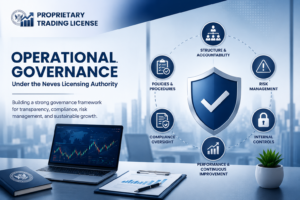
Operational governance is a critical component of every successful proprietary trading firm. Beyond delivering strong trading performance, firms must establish effective governance systems that promote transparency, accountability, risk management, and compliance. For businesses operating within the Neves Licensing Authority ecosystem, operational governance is an essential part of building a credible and sustainable proprietary trading business.
The Neves Licensing Authority promotes governance frameworks that help proprietary trading firms maintain operational integrity while preparing for long-term growth. Whether a firm manages funded trader programs or proprietary capital, implementing structured governance practices strengthens investor confidence, enhances business continuity, and supports responsible operations.
What Is Operational Governance?
Operational governance refers to the policies, procedures, internal controls, and management structures that guide how a business operates on a daily basis. It ensures that responsibilities are clearly defined, decisions are properly documented, and risks are effectively managed throughout the organization.
For proprietary trading firms, operational governance extends beyond administrative processes. It includes trading oversight, technology management, compliance monitoring, financial controls, data security, and organizational accountability.
Within the Neves Licensing Authority framework, operational governance demonstrates that a firm is committed to maintaining high professional standards while operating within an organized compliance environment.
Why Operational Governance Matters
Strong operational governance creates a foundation for sustainable business success. Without proper governance, even profitable proprietary trading firms may encounter operational disruptions, compliance challenges, or reputational risks.
Effective governance helps organizations:
- Improve internal accountability
- Strengthen operational efficiency
- Reduce business risks
- Maintain consistent compliance procedures
- Protect business reputation
- Build trust with banking partners
- Support long-term scalability
The Neves Licensing Authority encourages firms to adopt governance practices that create stable and transparent business operations rather than relying solely on financial performance.
Key Components of Operational Governance
A well-governed proprietary trading firm should establish several core operational functions.
Clear Organizational Structure
Every successful trading business should define roles and responsibilities across management, compliance personnel, operational staff, and technology teams. Clear reporting lines reduce confusion and improve decision-making.
Documented organizational charts also help demonstrate accountability during internal reviews.
Internal Policies and Procedures
Comprehensive operating policies provide consistency throughout the organization. These policies should cover:
- Risk management
- Trading operations
- Employee responsibilities
- Information security
- Data protection
- Business continuity
- Incident reporting
The Neves Licensing Authority recognizes that documented procedures contribute to stronger operational resilience.
Risk Management Framework
Risk management remains one of the most important governance functions for proprietary trading firms.
Operational risks may include:
- Technology failures
- Cybersecurity incidents
- Trading platform disruptions
- Human error
- Fraud prevention
- Business continuity challenges
Establishing risk identification and mitigation procedures enables firms to respond quickly while minimizing operational impact.
Compliance Oversight
Compliance should operate as an ongoing process rather than a one-time exercise.
A robust compliance function may include:
- Regular internal reviews
- Policy updates
- Staff training
- Documentation management
- Regulatory monitoring
- Operational reporting
By maintaining continuous compliance oversight, firms operating under the Neves Licensing Authority framework demonstrate their commitment to responsible business practices.
Technology Governance
Modern proprietary trading firms rely heavily on digital infrastructure. Governance should therefore include technology management and cybersecurity oversight.
Important areas include:
- Secure trading platforms
- User access controls
- Data backup procedures
- Cybersecurity monitoring
- Software maintenance
- System availability
Technology governance minimizes operational interruptions while protecting sensitive business information.
Financial Controls
Strong financial governance supports transparency and responsible resource management.
Key financial controls include:
- Accurate bookkeeping
- Budget monitoring
- Expense approvals
- Payment authorization procedures
- Financial reporting
- Audit preparation
These controls help proprietary trading firms maintain organized financial operations while supporting banking relationships and future business expansion.
Governance for Funded Trader Programs
Many proprietary trading firms operate funded trader evaluation programs. These businesses require additional governance measures to ensure fairness and transparency.
Best practices include:
- Clearly published evaluation rules
- Transparent profit-sharing structures
- Consistent trader assessments
- Defined payout procedures
- Fair dispute resolution processes
Operational governance helps create trust between firms and participating traders while reducing operational conflicts.
Business Continuity Planning
Unexpected events can interrupt business operations without proper planning.
A comprehensive business continuity plan should address:
- System failures
- Cyber incidents
- Natural disasters
- Staff unavailability
- Remote operational capabilities
- Emergency communication procedures
The Neves Licensing Authority encourages firms to prepare contingency strategies that support uninterrupted operations during unforeseen circumstances.
Staff Training and Accountability
Governance is only effective when employees understand their responsibilities.
Regular staff training should cover:
- Compliance obligations
- Internal procedures
- Risk awareness
- Information security
- Operational reporting
- Ethical business conduct
Well-trained employees contribute to stronger governance and reduce operational errors.
Continuous Improvement
Operational governance should evolve alongside business growth.
Successful proprietary trading firms regularly review:
- Internal controls
- Governance policies
- Risk management strategies
- Technology infrastructure
- Compliance procedures
- Operational performance
Periodic assessments allow firms to identify weaknesses and implement improvements before issues become significant.
The Neves Licensing Authority supports continuous governance enhancement as part of responsible organizational development.
Conclusion
Operational governance is far more than an administrative requirement—it is the foundation of a resilient and professionally managed proprietary trading firm. By implementing clear governance structures, maintaining effective risk management, strengthening compliance oversight, and investing in secure operational processes, firms can create a business environment built on transparency, accountability, and long-term sustainability.
For organizations operating within the Neves Licensing Authority ecosystem, operational governance demonstrates a commitment to responsible business practices and professional standards. Firms that prioritize governance are better positioned to strengthen stakeholder confidence, improve operational efficiency, support banking relationships, and achieve sustainable growth in the increasingly competitive proprietary trading industry.
